
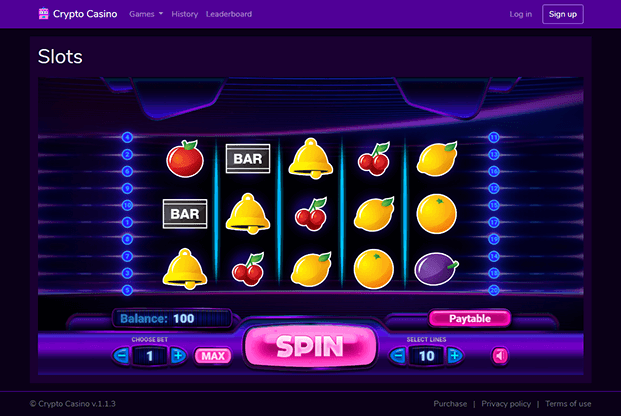
We accessed the Vegas Hero Casino slot online slots lobby with one goal: observe how demo mode operates under real browsing conditions, not through a marketing script. Demo play is frequently an afterthought, but for analytical players it’s a risk-free space where volatility, bonus frequency and interface responsiveness reveal themselves without risking money. At Vegas Hero the demo is located right inside the main slot grid. We didn’t need to create an account to start spinning. That direct, no-strings access places the platform and a curious user on the same wavelength straight away. Over several sessions we tested dozens of titles, logging load times, interface clarity and how reliably the virtual balance reset. No pop-ups bothered us to register for real money, a nice surprise. Throughout the tests we monitored visual presentation and, just as closely, each game’s mechanical rhythm: how well the demo copies the cadence and payout distribution you get inside a licensed environment. The demo proved to be a subtle instrument, far more than a simple preview.
The Architecture of Instant Access
Vegas Hero doesn’t position the demo behind a sign-up wall. That’s a conscious move, and it makes analyzing slots much faster. When we arrived at the slot category page, every title carried a clearly marked “Demo” or “Play for Free” button, with a colour that distinguishes it from the real-money trigger. That two-button layout removes confusion and enables us to transition between gathering information and committing when we want. The library works on HTML5, so demo games loaded straight in the browser, no extra downloads or plugin requests. We tried three devices: a desktop on standard broadband, a mid-range Android tablet and an iOS smartphone. The heaviest games loaded in under six seconds, and lighter classic slots loaded almost instantly. The interface scaled cleanly to each screen, with control panels pinned to the bottom edge on mobile without hiding the reels. That technical stability counts because a stuttering demo undermines trust in the live product. Vegas Hero appears to have invested in a fast, dependable content delivery setup, keeping the free-play environment on par with the performance you’d look for from a real-money session. We also noted that the demo balance resets could be triggered manually by refreshing the page, and the automatic reset after the balance hit zero functioned without delay every time, cutting interruptions out of the analysis.
Software Providers and Fair Play in Practice
Vegas Hero offers titles from a roster of over 40 software studios, and the demo mode uses the full RNG implementation from each provider instead of a simplified simulation. To cross-check, we ran the demo versions of NetEnt’s “Gonzo’s Quest” and Pragmatic Play’s “Sweet Bonanza” at Vegas Hero and compared them against the same demos hosted directly on the developers’ official sites. The return-to-player algorithms, symbol distribution and bonus round triggers behaved identically over long sessions. This matters because some platforms use lightweight demo builds that inflate hit frequency to make a game look more generous than it really is. We observed no fiddling here. The demo paytables and game rules are accessible from within each title, and the information aligns with the published RTP ranges. We paid close attention to how bonus buy features work in demo mode. Games like “The Dog House Megaways” let us test the feature with the virtual balance, walking through the full mechanical cycle without restriction. Verified RNG implementation means that anyone using demo mode to study volatility patterns obtains an accurate, even if statistically non-predictive, picture of the real product. For players who treat slot analysis as a data exercise, this kind of honesty isn’t optional.
Visual Quality and Sound Design in the Test Environment
We evaluated audio-visual quality by operating the same titles in demo and real-money windows side by side on two identical monitors, for a subset of games where we held active accounts elsewhere, purely to compare. The demo versions at Vegas Hero showed no downscaling of texture resolution, frame rate or sound mixing. “Dead or Alive 2” rendered its gritty Western atmosphere with deep contrast ratios and a steady 60 frames per second on desktop. Mobile performance held between 30 and 60 frames depending on the device’s GPU, with no dropped frames during complex animations like expanding wilds or symbol transformations. The audio, often the first casualty in compressed demo builds, stayed full-range. Background scores, reel-stop clicks and celebratory stingers played without clipping or lag. We watched how the platform handles games with cinematic intro sequences, such as “Immortal Romance.” The intro played once on first load and could be skipped on later loads, a considerate touch that respects your time. The shift from base game to bonus round comes with a smooth screen dissolve, not a jarring cut, which tells you the provider’s code is well integrated. Those details might seem cosmetic, but they add up to an honest sensory experience that helps a player decide whether a slot’s theme and soundscape will hold attention during long real-play sessions. Vegas Hero delivers that without compromise.
Browsing the Slots Library in Demo Mode
The search and filtering tools inside the demo environment at Vegas Hero appeared precise and quick during our navigation tests. We began with wide category filters: “Newest,” “Popular,” “Jackpots,” and “Megaways.” Swapping between them changed the game grid in under a second. A specialized search bar allowed us move straight to particular titles like “Book of Dead” or “Starburst,” both of which appeared as the top result after typing only three characters. Provider-based filtering is especially helpful if you desire to evaluate demo mechanics across studios such as NetEnt, Pragmatic Play or Play’n GO. The lobby shows game thumbnails that feature a subtle hover animation on desktop, while on mobile a single tap launches a quick-preview overlay with the game name, provider and two action buttons. That spares you from launching a full page just to identify a game. Alphabetical sorting worked without a glitch, and the “Recently Played” section kept our demo session history even without an account, likely through browser cookies. That minor feature made it easy to resume testing after a break without searching again. We noticed the absence of a specialized “Demo Only” toggle. One button that conceals all the real-money calls in the lobby would keep the free-play path even smoother. Still, the layout did not pressured us toward a deposit, so the researcher’s intent to explore and contrast stayed honored.
Analyzing Game Mechanics Without Financial Pressure
Our session logs showed that demo mode at Vegas Hero works as a sharp laboratory for pulling apart slot mechanics. We picked five titles across low, medium and high volatility and executed 200-spin sequences on each, tracking base-game hit rates, scatter frequency and bonus round entry points. “Big Bass Bonanza” showed the tight base-game payouts we expected, offset by its free spins mechanic, while “Reactoonz” replicated its cascading grid behaviour exactly as the real-money version does. The ability to adjust bet levels in demo mode is fully enabled, so we could evaluate how stake size modifies the visual and audio feedback loops, even though no actual value is exchanged. Max bet buttons and autoplay functions stayed active in most titles, though a few providers deactivate autoplay in demos because of regulations in certain jurisdictions. The demo balance, usually between 1,000 and 100,000 virtual credits depending on the game, provided us enough runway to activate at least a couple of bonus rounds in all but the most volatile titles. We deliberately burned the balance to zero several times to ensure the reset worked dependably, and it functioned every time. This pressure-free space allowed us calculate bonus buy cost-to-return ratios, study the pacing of cascading wins and identify dead-spin stretches without emotion getting in the way. That kind of sober observation is almost impossible when real losses influence your judgment.
Tactical Applications for the Discerning Player
We approach the demo mode at Vegas Hero as a calculated instrument, not a casual toy, and we integrate it into a structured selection process. Our approach has three stages. Stage one: filter out slots whose mathematical model doesn’t fit our bankroll parameters. A 200-spin demo session reveals enough of the pattern to make a go or no-go call without investing a cent, especially for games that advertise extreme volatility. Stage two: use the demo to master payline structures and special symbol interactions before a real-money session, which reduces expensive misclicks and rule misunderstandings. Stage three: assess rhythm and speed settings, including quick-spin and turbo toggles, to determine whether a game matches focused play or works better as background entertainment. Here is a streamlined framework we shaped during testing:
- Execute a minimum of 150-200 demo spins to observe base-game payout frequency and identify dead-spin clusters.
- Actively trigger or purchase at least one bonus round to assess the feature’s mechanical depth and any multiplier ceiling.
- Switch between bet levels to see if the game brings new symbol behaviours at higher stakes, as some modern titles do.
- Observe the virtual balance recovery rate; if a game fails to keep a reasonable cycle without repeated resets, it indicates higher risk.
- Compare two titles from the same provider side by side in separate tabs to juxtapose volatility and theming.
Using this approach, we filtered out several good-looking slots that had punishing dead-spin patterns we couldn’t accept. The demo becomes a safeguarding filter, not a replacement for real play but a essential warm-up for anyone working with analytical discipline.
The Boundary Between Simulation and Dedication
Even with a demo this thorough, we have to recognize its limits as a simulation. Demo credits carry no emotional weight, and that affects decision-making at a fundamental level. We noticed ourselves taking risks on bonus buys that we’d pause over with real money, which created a mild optimism bias when we later reviewed a game’s potential. The platform tries to keep us grounded by showing a persistent “Fun Play” watermark in the corner, but the psychological gap persists. Progressive jackpot slots in demo mode display the current pooled value but can’t award it; any jackpot symbol combination triggers a fixed virtual payout instead. It’s an honest setup, but it strips the exact adrenaline trigger that defines jackpot appeal. We also detected that some provider-specific gamification features, like Pragmatic Play’s Drops & Wins integrations, don’t appear in demos because they need real-money participation. Moving from demo to real play at Vegas Hero requires account creation at that point, but the hand-off remains clean, with the chosen game still in focus after you register. We recommend treating the demo as a controlled lab that models the machine accurately but cannot copy the human element of real stakes. Grasping that boundary keeps the tool useful and stops overconfidence from spilling straight into real-money sessions.